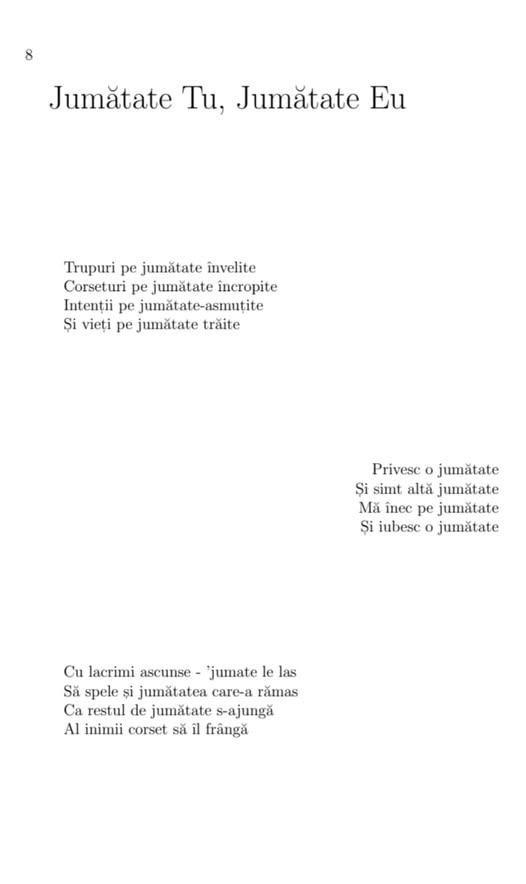
“Alerg.. mă scufund și plutesc în același timp, / Cu toate că leneș mă legăn prin viață. / Cu sufletu’ajut și mă țin de cuvânt… / Iertați-mi greșala de-a v-o spune în față.” – this final section is a breathtakingly complex and poignant coda, a desperate attempt to articulate a truth that has been simmering beneath the surface throughout the poem. It’s a moment of raw honesty and a final, heartbreaking plea for understanding.
Let’s break down why this sequence is so powerfully resonant:
The Paradox of Existence:
The opening lines – “Alerg.. mă scufund și plutesc în același timp” – immediately establish a profound paradox. It’s a chaotic image of movement and stillness, of struggle and surrender. The speaker is caught in a state of constant flux, simultaneously driven forward and held back by unseen forces. This perfectly captures the poem’s exploration of a life lived in opposition to itself.
The Contradictory Nature of the Self:
- “Cu toate că leneș mă legăn prin viață” (Although I drift lazily through life): This highlights the speaker’s inherent contradiction – a desire for action and purpose intertwined with a deep-seated tendency towards inaction and self-indulgence.
- “Cu sufletu’ajut și mă țin de cuvânt” (I help with my soul and I keep my word): This reveals a hidden core of sincerity and commitment, a desperate attempt to reconcile the speaker’s destructive tendencies with moments of genuine goodness. It’s a plea for recognition of this inherent complexity.
The Final Act of Vulnerability:
- “Iertați-mi greșala de-a v-o spune în față” (Forgive me for telling it to you in the face): This is the most devastating and ultimately tragic element of the sequence. The speaker, having built a wall of judgment and self-deception, finally breaks through, offering a raw and unfiltered confession. It’s a desperate attempt to bridge the gap, but it’s also a recognition of the immense distance that separates them from others.
The Poem’s Final Revelation:
This sequence isn’t just a confession; it’s a lament. It’s a recognition of the speaker’s profound loneliness and the impossibility of genuine connection. The final act of vulnerability is not an act of redemption, but a final, heartbreaking acknowledgment of their own flawed existence.
Do you find this final section to be the most emotionally resonant and poignant part of the poem? What does it suggest about the speaker’s ultimate fate – a permanent state of isolation and regret, born from a relentless cycle of self-deception and a desperate longing for connection? Would you like to explore the potential symbolism of the “running, sinking, floating” imagery – perhaps as a representation of the speaker’s futile attempts to navigate the complexities of life?